Manufacturing Execution Systems (MES) for Window Manufacturers
Published: 06/02/2026
By: Paradigm
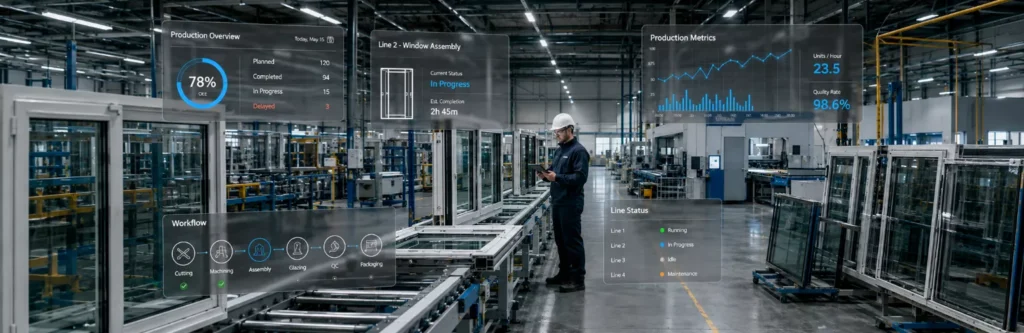
Digital Tools Can Transform a Business
Manufacturers juggling custom sizes, endless product variations, labor shortages, and rising delivery expectations need more than just spreadsheets and sample books to stay competitive. As window and door production grows more complex, digital tools and automation are becoming essential for keeping operations efficient, accurate, and on schedule. Read more about the digital transformation in construction here.
A manufacturing execution system, or MES, helps manage and track what is happening in production in real time. It connects jobs, materials, labor, machines, and workflows so teammates can see where orders stand, where delays are building, and what needs immediate attention.
What’s the Difference Between an MES and ERP?
ERP systems are generally built to manage the broader strokes of business. It usually supports planning, purchasing, accounting, inventory, and other administrative functions that help the organization operate as a whole.
A MES is focused on the factory floor. It helps execute the work, track production in real time, and keep jobs moving through each stage of manufacturing. In simple terms, ERP helps plan the business and the MES helps run production effectively once the work begins.
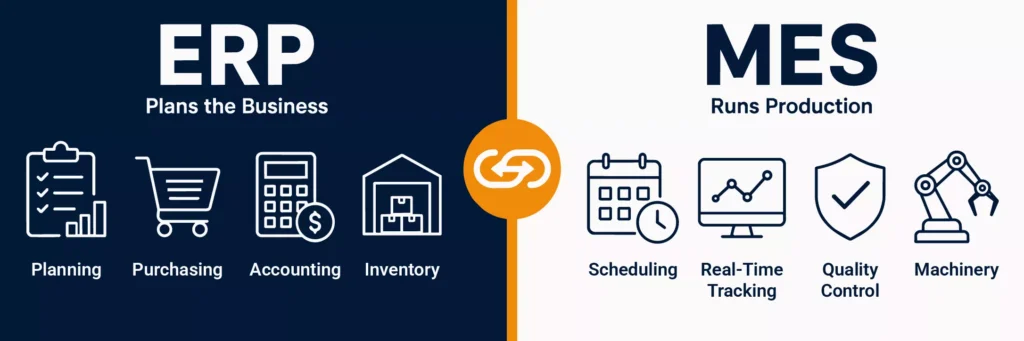
In modern manufacturing environments, these two worlds are becoming more intertwined which requires more visibility. Manufacturers expect planning and execution systems to share data so sales, inventory, production, and delivery stay aligned.
Why MES Tools Matter
Window manufacturing comes with a level of complexity that run-of-the-mill production tools struggle to support. Orders often include custom dimensions, multiple frame and glass options, hardware variations, energy performance requirements, and exact fabrication rules. Material costs are significant and production precision matters.
That is why the choice to implement an MES tool is important. They help coordinate the moving parts that make window manufacturing more difficult than standard assembly work. They also align with broader manufacturing trends toward connected operations, better machine visibility, and more standardized information flow between systems and departments. In practice, that means fewer blind spots and better control over what is happening in production.
How Window Manufacturers Use MES Software

Production Scheduling & Workflow Management
Scheduling is one of the most immediate benefits of MES software. A strong system helps manufacturers automate schedules, prioritize jobs by due date or capacity, and reduce bottlenecks between production stages. That matters because delays rarely stay in one department. A problem in glass cutting or frame fabrication can quickly affect assembly, finishing, packaging, and delivery.
For window manufacturers, production scheduling is not only about speed. It is about sequencing work in a way that matches labor, machine capacity, and order requirements. MES software helps create that structure.
Real-Time Production Tracking
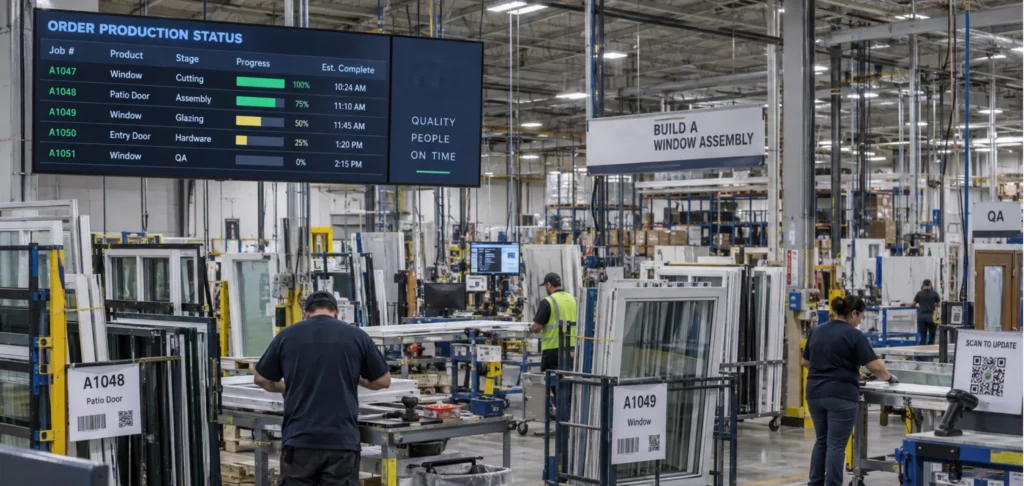
Real-time tracking gives teams a clearer view of work in progress. With barcode scanning, job tracking, and status updates tied directly to production activity, supervisors can see where orders are, where delays are happening, and where action is needed.
That visibility improves responsiveness. Instead of finding problems later through late-stage quality control checks, teams can identify delays while the work is still moving and make adjustments in real-time.

Inventory & Material Management
Window production depends on having the right materials available at the right time. That includes frame materials, glass, hardware, sealants, and other components tied to each order. MES software helps track those materials more accurately, manage bills of materials, and reduce both over-ordering and shortages.
When inventory is visible, planning is stronger. Purchasing decisions improve, waste is easier to control, and production teams spend less time waiting on materials that should have already been available.

Quality Control & Traceability
Quality management is a major reason manufacturers invest in MES software. Real-time tracking makes it easier to document defects, trace rework, and maintain records tied to each unit or order. That supports both internal quality control and downstream needs such as warranty claims, compliance documentation, and customer issue resolution.
For window manufacturers, traceability matters because the products are often custom, high-value, and difficult to correct once they leave the factory.
Machine & Equipment Integration
MES software can also connect to CNC machinery, cutting equipment, and other production systems to improve machine communication and performance visibility. This helps manufacturers monitor throughput, reduce downtime, and keep production data more closely aligned with what is happening on the floor.
When equipment and workflows are tied together, it becomes easier to spot inefficiencies and improve output over time.

Labor & Performance Tracking
Labor is one of the most important variables in any manufacturing operation, and one of the hardest to improve without visibility. MES software helps manufacturers track labor efficiency, downtime, and productivity by shift or work center. It also reduces manual paperwork, which makes the data more useful, more readily available and easier to act on.
This kind of performance tracking helps leaders understand where time is being spent well and where process improvements may have the biggest payoff.
Brace for Digital Impact
Improved Production Visibility
One of the clearest benefits of MES software is visibility. Real-time dashboards and reporting give teams an understanding of production status, work in progress, and problem areas. That leads to faster decisions and a more controlled response when issues arise.
Reduced Waste & Scrap
Material waste can quietly erode profitability in window manufacturing. MES software helps reduce that risk by supporting better material planning, stronger cutting optimization, and more consistent execution on the floor.
Faster Lead Times
When scheduling, inventory, and production tracking are connected, handoffs are cleaner and delays become easier to manage. That can help manufacturers complete orders faster and provide more reliable delivery timelines.
Better Custom Order Management
Made-to-order manufacturing creates more variation and more pressure on internal systems. MES software helps manufacturers manage that variation more effectively by connecting order details, configuration logic, and production workflows in a way that is easier to track and execute.
Increased Operational Efficiency
The broader operational benefits are straightforward: less paperwork, fewer mistakes, and better communication between departments. Those gains may look incremental at first, but together they make a significant difference in how smoothly the operation runs.
Enhanced Customer Experience
Production systems may feel internal, but they have a direct impact on the customer. Better visibility, more accurate timelines, and fewer manufacturing errors all contribute to a better experience for dealers, builders, and end customers.
Implementing MES Software

Choosing the Right Software
The right MES platform depends on the business. Manufacturers should evaluate software based on production complexity, business size, integration needs, and long-term scalability goals. A system that works for one operation may not fit another if the product mix, factory setup, or workflow requirements are different.

Start with Clear Operational Goals
When priorities are defined early, it becomes much easier to measure whether the software is delivering value. That may be reducing scrap, improving throughput, lowering downtime, or increasing on-time delivery.

Standardize Internal Processes Early On
MES software can improve processes, but it does not automatically fix broken ones. If workflows are inconsistent, undocumented, or dependent on workarounds, those problems will still exist after implementation. Stronger process discipline usually leads to stronger results.

Integrate MES with Existing Systems
MES is most effective when it works as part of a connected environment. That may include ERP, CRM, accounting, CNC machinery, and inventory systems. Integration helps eliminate duplicate entry, improve visibility, and make sure production data supports the rest of the business.

Prioritize User Adoption & Training
Shop-floor usability matters. The software has to be practical for the people using it every day. That means clear workflows, accessible interfaces, and enough training to build confidence. If operators and supervisors do not trust the system, adoption will suffer.

Use Data for Continuous Improvement
The value of MES does not stop at visibility. Over time, the data can help identify recurring production issues, improve machine and labor utilization, and support better decisions across the operation. That is where MES becomes a tool for continuous improvement, not only day-to-day management.
MES Must-Have Features
The strongest MES platforms for window manufacturers usually include:
- Production scheduling
- Real-time tracking
- Inventory management
- Barcode scanning
- Machine integration
- Reporting dashboards
- Mobile access
- ERP and CRM integrations
- Custom product configurators
- Quality management tools
The point is not to check every box for the sake of it. The goal is to choose a platform that supports the complexity of your specific manufacturing environment.
Paradigm Nexus Manufacturing Execution System
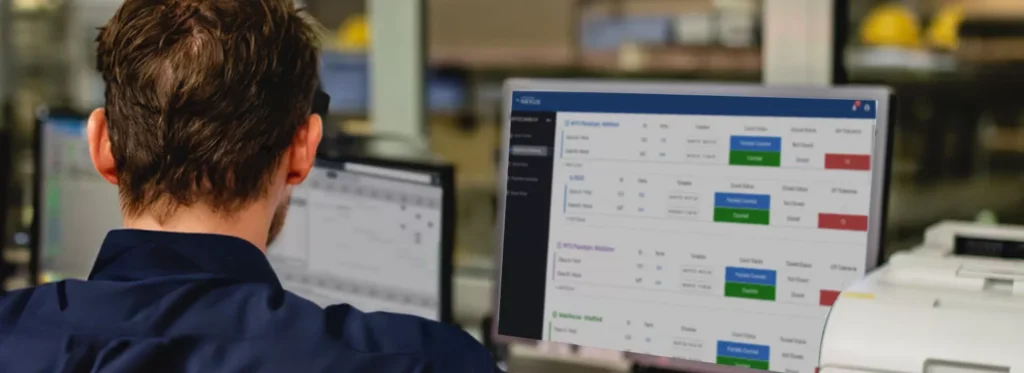
For window manufacturers looking to connect quoting, production, inventory, and delivery in a more unified way, Paradigm Nexus is crafted specifically for the building industry. It helps bring greater visibility and control to the production process while supporting the complexity of made-to-order manufacturing.
That matters because the factory does not operate in isolation. It is part of a larger workflow that starts with product configuration and quoting, then moves through scheduling, fabrication, and fulfillment. A connected MES platform helps keep those stages aligned so manufacturers can reduce friction, improve responsiveness, and operate with greater consistency.
If your business is looking for a better way to manage execution on the factory floor without losing sight of the full sales-to-production cycle, Paradigm Nexus is worth a closer look.
Latest Blog Posts
How to Know When Your Plant Needs MES Automation
Missed schedules, manual data entry, rework you can't trace? Learn the signs
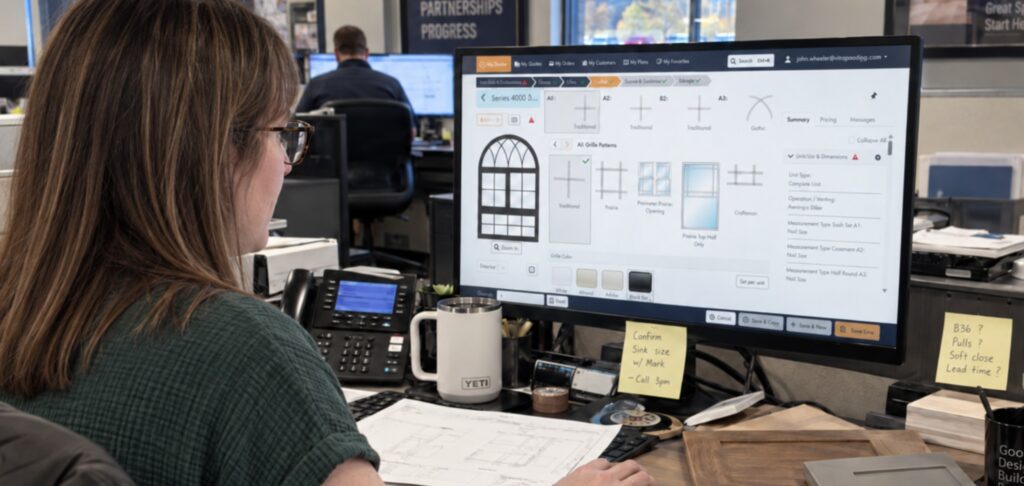
Friction vs. Features: Why Removing Steps Beats Adding Features in CPQ Software
Feature lists don't win quotes, but speed does. Cutting steps from your

CPQ vs. Platform: Why Paradigm Omni Is a Revenue Platform, Not Just a CPQ Tool
Comparing CPQ software? Learn the difference between a quoting tool and a