Software Succeeds When Trust Leads | Rick Cross, Account Executive at Paradigm
The floor at GlassBuild is buzzing with AI talk, but we cut through the noise to get practical. Guest Host Stefanie Couch, Founder of Grit Blueprint, sits down with industry veteran Rick Cross, Account Executive at Paradigm, to map the real ways AI helps window, door, and glass manufacturers capture traditional knowledge, reduce errors, and unlock self‑service quoting that customers actually use. The takeaway is clear: people and process come first, and the right software simply amplifies what aligned teams do well.
• AI as a practical tool to capture traditional knowledge and cut errors
• People and process as the real drivers of project success
• Trust and win‑win alignment across teams to avoid blame
• Software as leverage for quoting, self‑service, and scale
• "Hull speed" as a guide to pace growth and change
• Sales habits to reset slumps and sharpen skills
• Building talent pipelines through schools and trade routes
• The future of fenestration careers amid AI and automation
If you enjoyed today's conversation, be sure to subscribe on your favorite podcast platforms and follow Paradigm on LinkedIn and YouTube to catch more stories, insights, and ideas from your peers across our industry.
🎥 Watch More Industry Insiders Episodes
Subscribe here: https://www.youtube.com/@myparadigmtechnology
🚀 About Paradigm
Software for the Building Industry | Paradigm’s software solutions help organizations throughout the supply chain to boost sales, reduce costs, and become more competitive. We exclusively serve the building industry, and we’ve developed our solutions with your unique challenges in mind.
🔗 Learn more: MyParadigm.com/
Facebook: https://www.facebook.com/myParadigmTechnology/
LinkedIn: https://www.linkedin.com/company/myParadigmTechnology/
SPEAKER_01:
Any technology that comes in and it seems disruptive, people get really scared. Even like the tractor, 98% of jobs used to be agricultural jobs, and then the tractor came and it changed our whole world. I think the AI will do that same type of thing, but it will be just like with the tractor. You'll still have something else. You go do it's just different.
SPEAKER_03:
People are just the greatest part of this when you have the opportunity to see people in different situations and how they react and having projects come with great outcomes. That makes it all fun, but it's never easy. It's all about people, process, it's not about the software. And you see that even down at the team levels when I see teams that are trusting each other. There's a win-win in mind. That's where you see projects go really well. And when you don't see that, it's just a lot of finger pointing, and you know, software doesn't work. It does work. It's all about the people in the process.
SPEAKER_00:
Welcome to the Paradigm Industry Insiders podcast, where real people share real stories about what's happening with doors, windows, network, and life. I'm John Wheeler, and along with my co-host, we sit down with your peers who are moving our industry forward. These are honest conversations, packed with practical insights and lessons you can take and bring value to your team. Here's today's conversation.
SPEAKER_01:
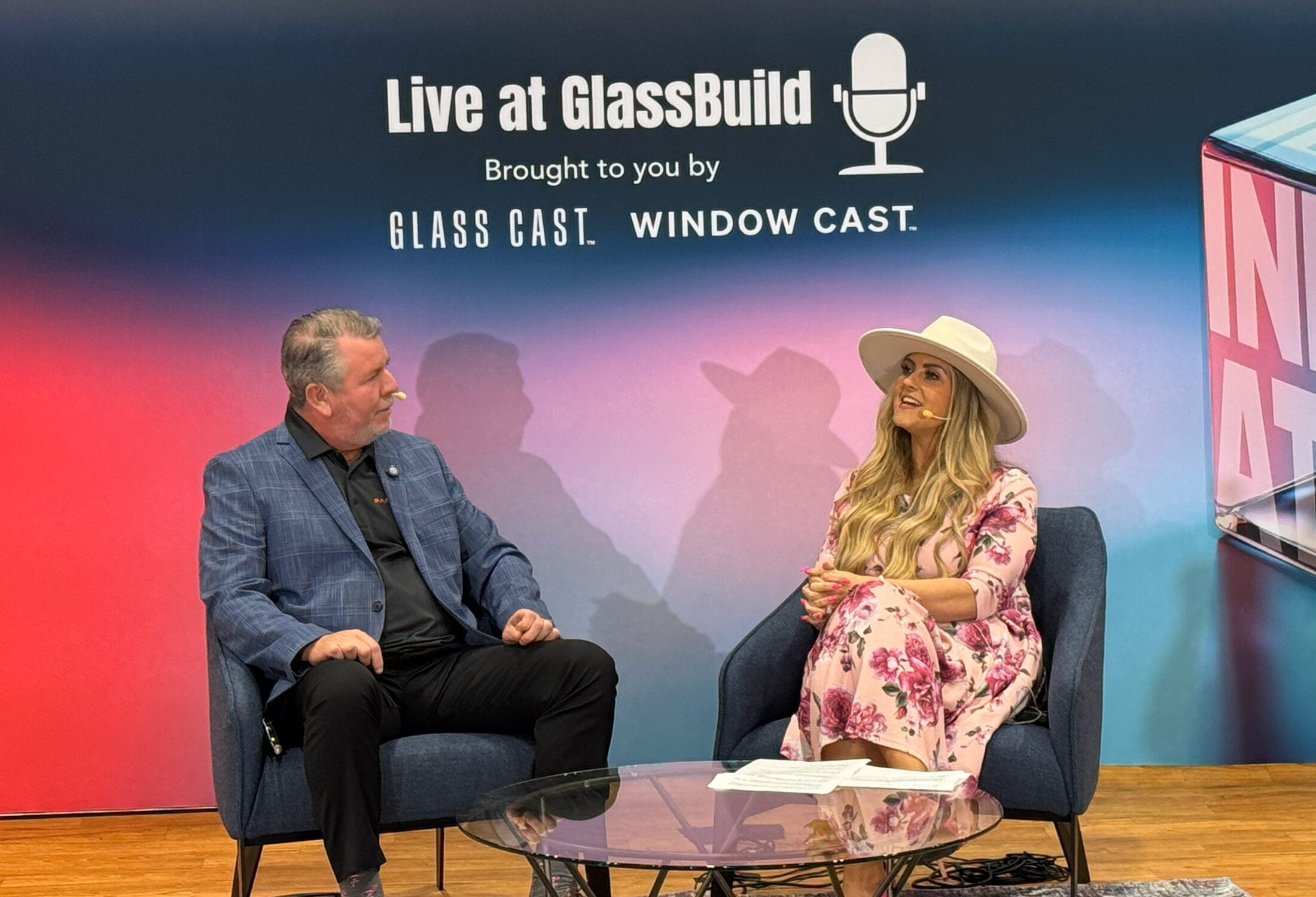
We are here live on the floor today at Glass Build 2025. Welcome to this episode, a special edition of the Paradigm Industry Insiders Podcast and Glasscast. So this is a two-for-one special, and I am here with my dear friend Rick Cross from Paradigm. He is an amazing man in the industry who's been doing a lot of sales and software for years, and you've been one of the best mentors in my life. Welcome to the show, Rick. Thank you for joining me.
SPEAKER_03:
Well, thanks for having me. It's uh nice intro. Thank you. All over the top. So I owe you those glass wines on me.
SPEAKER_01:
I love it. Well, we're here today. There's a lot going on on the floor. We've been here two days now. How's your day been at Glassbuild?
SPEAKER_03:
Tiring.
SPEAKER_01:
Yeah, a lot of conversations.
SPEAKER_03:
Yeah, a lot of great conversations, a lot of uh new names, new ideas popping up with AI and some bots and some interesting things to see uh how people are trying to uh take take the hot word and do something with it. So it's pretty interesting.
SPEAKER_01:
For sure. Yeah, I mean, let's just hop right into AI because it's such a great topic. You know, it's obviously trending, everybody's talking about it, but nobody I feel like our industry, no one quite knows exactly what to do. What's signal, what's noise? What do you think? One of some of the things like you're hearing, what are the problems that you think we could solve with AI that are pretty easy to solve? Maybe not easy, but one of the first things we could solve.
SPEAKER_03:
I think it's uh a lot of that tribal knowledge that we can get systems to start to compose and digest, um, eliminating just a lot of the human error opportunity. Um, and then you start thinking of taking another level where it starts to really know who you are and know more about you. Um, so I don't think it's noise. I I think it's real. I think the whole fear that it's taking over is ridiculous. Yeah, it's almost like that next generation. We went from DOS, we went to mainframes, everything was in Boca Raton, then it went to client server, and now we're in the cloud.
SPEAKER_02:
So it's like, I'm in the clouds all the time, Rick.
SPEAKER_03:
In my younger days, well, I won't go down that one. So I've seen a couple clouds.
SPEAKER_01:
Well, you know, at the end of the day, um, it's interesting because I do think any technology that comes in and it seems disruptive, people get really scared. Even like the tractor, and you know, the 98% of jobs used to be agricultural jobs, and then the tractor came and it changed our whole world. Yep. I think the AI will do that same type of thing, but it will be just like with the tractor. You'll still have something else you go do, it's just different.
SPEAKER_03:
Just different.
SPEAKER_01:
And I'm excited about that for industry. You've been in this industry a while, but you've also done a lot of things. You've worked for big companies, smaller companies. Yes, done a lot in your career. And when you think about those things, what lessons have kind of shaped how you look at relationship building? Because you're a really great relationship builder. Where does that come from? And what do you think is the most important thing in really building long-term great relationships?
SPEAKER_03:
Interesting question. Um, I I you know to me it all goes down to just basic right from wrong. You know, I I if you just boil everything to make it simple, it's either right or wrong. And when you look at relationships and selling software or projects, there's a right or wrong. There's no great. And if um I learned early that if I focus on right, those people will come back. If wrong happens, you're not gonna do much about it. I can only influence my side of the house. So there's a win wrong, you know, win loss, or a right and wrong. But um, I've been blessed by really focusing on that. Yeah, and and I think that's you know, people are just the greatest part of this when you're in the op have the opportunity to see people in different situations and how they react and having projects come with great outcomes, that makes it all fun. But it's never easy, it's all about people and process, and it's not about the software.
SPEAKER_01:
So outcome is different when you have a relationship with someone with just saying, Hey, here's this thing I sell. When you have a relationship and you know how to build that, it's more than that.
SPEAKER_03:
Uh definitely. And you see that even down at the team levels. When I see teams that are trusting each other and there's a win-win in mind and clear paths, that's where you see projects go really well and great outcomes. And when you don't see that, you just a lot of finger pointing and you know, software doesn't work. It does work, it's all about the people in the process.
SPEAKER_01:
So absolutely. It can go horribly wrong or it can go really well. But if you have a good software that really can solve problems for you and your customers and reduce friction, it can be an ultimate leverage point for exponential growth in your business. And we've seen that through things like Paradigm with, you know, window and door quoting software, taking it from having to enter a door order and a quote separately. You just enter it once, or having those pictures, or having someone be able to do something at 8 p.m. at night when they would normally have to wait. And maybe you call someone else. Those types of things can really change your business if you do it right.
SPEAKER_03:
It's all about doing it right. Yeah. I mean, I just it's so, you know, everybody wants to just automate everything and have it short term. We uh we have this short-term mentality drive-through or have it on my mobile app. Uh, but these projects take some time. And if you build the foundation right, you can go up and scale, and you start to see a little disruption when you've got dealers or customers entering their own quotes versus an army of CSRs that should be doing something else. So yeah, it's fun when you see the projects go that way.
SPEAKER_01:
I agree. Um well, you have been a very big part of my life for the last five years.
SPEAKER_03:
Maybe probably when that first.
SPEAKER_01:
And so I appreciate that first off. But you've taught me a lot about patience in sales. Uh I wasn't exactly born with a lot of patience.
SPEAKER_03:
I don't know what it is.
SPEAKER_01:
I knew plenty about stupidity. But you know, with the with the things of of long term, these projects can take forever. Oh, yeah. And sometimes in my younger years, but even still, you struggle because you want the deal to close or you want people to move faster. And we were actually on a trip together. We're at a show this summer. Um, and we were we were coming back from an event and we were sitting on the bus, and you said something to me that really struck me, and I thought it was a really great analogy. So I'm gonna let you tell it, but you told me, Stephanie, you can only move so quickly in things. And you talked about your love of boats, and you talked about something called hole speed.
SPEAKER_02:
Oh, yeah.
SPEAKER_01:
Tell me what that means and a little bit about why it matters.
SPEAKER_03:
Well, I'm not a very bright guy, so I can't tell you the physics of it, but I learned from a gentleman many years ago uh the whole principle of hole speed and the physics behind a a hull and how fast wind or motor can push it. It just physically can only go so fast, or something really bad's gonna happen. So I learned a lot, even sales cycles, uh doing transformation, whether it's digital or just cultural, it takes time and and you got to build the hole to go to the speed that you want it to and have the propulsion.
SPEAKER_02:
Yeah.
SPEAKER_03:
Um, you can't throw a hundred people at something and say you're gonna grow the business if the hole's not there.
SPEAKER_01:
So just an analogy, but I can only break through that water so fast, or the boat will break apart.
SPEAKER_03:
I don't care what's behind pushing you. Yeah, it's gonna break. So you got to plan that out. You're doing a good job, and you gotta look at, you know, there's a lot of swells out there and changing winds, and you got to adjust and always remember your whole speed.
SPEAKER_01:
So I thought that was such a powerful analogy because a lot of times when you think about it, like you you put more engine behind it, you you put more wind behind it, but there is a certain point where even if you do that, it will break down.
SPEAKER_03:
Bad things are gonna happen. Yeah, you're not gonna get the results that you thought.
SPEAKER_01:
Yeah, and if we can just be steady, even if you still move quickly, but if you're just steady in that and don't push it too hard, I I that hit me hard. I think the patience piece is another thing that I've just learned from you, especially around the sales cycle, uh, the relationship building and allowing people to do things at a pace, the when to break and when to push the gas. There's a real elegance in that in sales of you do sometimes need to push a little gas and push people or help them, you know, but not in a pushy way. But then sometimes you do need to let them neutral or really just pause for a little while.
SPEAKER_03:
Yeah, sometimes back off. Yeah, a little space to let them think it through.
SPEAKER_01:
How do you know when to do that? How do you know when to break and when to when to push a gas?
SPEAKER_03:
If I knew I would own an island with a really big cool boat and a couple other boats. So I don't know, but a lot of it's just you know, gut and experience and try to be very empathetic to see where people are coming from and kind of understand where their world is. Helps me understand how I can kind of push them and navigate them to where I think they should be. But ultimately it's got to be their decision. But yeah, it's a lot of fun when you can be part of that and see that evolution of inquiring or an RFP, and then when you really get down to knowing them and understanding what they really want to accomplish and how to help them.
SPEAKER_01:
Yeah.
SPEAKER_03:
And then see that through. So that's the fun part.
SPEAKER_01:
Yeah, and then hopefully ultimately once they do that, the outcome is so good for them, like we said, and it really helps them change their business or reduce friction in their cycle, no matter what they're doing, whether it's B2C or B2B. I love that that can happen with software so quickly. And it is just like I said, exponential gains can happen. Well, one thing that I really am excited about and scared about in the future of our business is the next generation of talent. Not because I'm necessarily worried about the talent, but because there are a lot of pillars of our industry that are going to be retiring soon. There are a lot of things changing with AI and tools and even the products. And there are some organizations that are doing things to try to help with education and even networking. WDMA, the Window and Door Manufacturing Association, is one that we're both members of. We were there together in Boston a few weeks ago. And then we're here today with you know the National Glass Association at Glassbuild. What is the future of our industry look like for these people? And how can an organization like this or WDMA help that next generation?
SPEAKER_03:
It's a great question. I mean, to me, being a father of three and now a grandfather of two, um, I I look at the this generation just kind of lost, and it's such a short-term, everything's fast, and I I have a real sweet spot in my heart to try to get these kids to understand that there's a real career, something that's consistent. Um, you know, back in my day, it was they'd go to UAW and work 30 years and retire, and you're done. Uh, they don't need to go to college. You know, I'm a good example. I didn't quite make it through. Yeah, I don't think I made it through the first month, but you know, it it's one of those things. There's such an opportunity for somebody to make a good career in the value of what we do. And I I look at it from like a Peter Jackson, it's about affordable homes, having the American dream. And this is a component of it. How do we make it the house safe, affordable, and have a good lifestyle? So I'd love to see us do a better job of getting down further into the the high schools and the trade schools to get them in, whether it's engineering and all the other different uh skill sets needed to come in and make a good living and have a positive impact.
SPEAKER_01:
And I I'm with you on that. I think there's not enough uh students out there that even know what's possible. I think we have to show them the opportunities that are out there in our industry, what would be a fit for them personality or skills-wise. And then there's probably something in a million different ways that could fit that. You know, if you want to do software, you can do that. If you want to do something with your hands, you can do that. If you want to, you know, go out and do some sort of HR or people role, you can do that. There's just so much opportunity. But I do think with AI changing things that our trades and our our building industry is gonna be more valuable than ever for two reasons because we need to build AI data centers to feed all this stuff that's happening, and also just because it's gonna be hard for them to automate or AI uh exponentially taking jobs out in something that you're using your hands to build. So I think there's a lot of opportunity that's coming down the pipeline. Window and door manufacturing and glass and fenestration is something that we both are around a lot. Are there certain things that you see people who are really doing well at recruiting young talent? Like what do you see things that are working in the industry to get them out there?
SPEAKER_03:
You know, I I've seen a lot of pockets of it. It just doesn't seem like we've gotten a larger group to really get out and start to do that farming. I mean, there you don't go to college and see a window in fenestration. Say fenestration, people. What are you saying there? That's an HR issue.
SPEAKER_01:
Yeah, what in the world is that?
SPEAKER_03:
Yeah, that's uh be careful there. So I I I I see and we've saw you know WDMA and and Millwork Alliance, same thing. We're we're all talking about trying to figure out how to have seminars and and recruit, but I think we can do a better job and hopefully we'll we'll start to see an impact, come up with some other ideas. I think smarter people than me. But there's some great brands that we see with these manufacturers that uh get together, they can probably do some pretty neat things around that.
SPEAKER_02:
That's awesome.
SPEAKER_03:
Some seminars, get out to these schools, uh, do some things like that so there's some visibility. I mean, I'm not a TikToker, but I'm sure if somebody puts some things on TikTok, they might figure out how to recruit some people.
SPEAKER_01:
I could be a TikToker.
SPEAKER_03:
Yeah, I just not seeing that.
SPEAKER_01:
I don't know, Rick. Don't underestimate yourself. Don't limit that could be tick to be my retirement. You on a boat doing TikToks?
SPEAKER_03:
No, I never thought of that one.
SPEAKER_01:
You could call it Trick Talk. Oh my god.
SPEAKER_03:
You're on it. You're on it.
SPEAKER_01:
We gotta we gotta trademark that immediately.
SPEAKER_03:
Immediately.
SPEAKER_01:
I love it. All right. Well, last question of the day. If someone's listening to this and they're struggling with doing sales in any kind of role, it doesn't have to be technology sales, but if they're struggling and they don't know what to do, what's your best advice for someone who wants to get better or close more deals? And what would you tell them to do?
SPEAKER_03:
Well, usually if somebody's struggling at short term, I call it like sports, the yips, just not able to get that ball over there. I I I mean, to me, it's always you gotta get away, gotta get away and take chills, even during the day, go take a walk, go do something to get yourself out of it. Yeah, sales is a tough job. I I I laugh and talk about it, but it's so true. I don't go to work and come home with a tie. Yeah, I go to work and come home with a loss or a win. There's either or. There's and um so usually when I see people that are struggling a bit, take a break, get away from it. Um, I always believe in reading, sharpening your sword. And you you've got to saw, you know, sharpen the saw. You gotta have your own devotionals that I do. You gotta have some routines. Yeah, and those routines sometimes you gotta break them up when you get into a a lull and change it up a bit.
SPEAKER_01:
Um I like your walking habit. I think it I I do. I think that makes a big difference. You like 10 minutes sometimes, it resets you.
SPEAKER_03:
Just get out in the weather, uh, get out in the air and the the weather in Cleveland, it can be difficult in February. But bundle up, just get out and just try to decompress from it, and then I'll call you, I'll call a friend. Yeah, what are you up to? What can we do? So try to have a positive impact on somebody else while I'm having a bad day. It usually bounces me back into it, and it's as you say, it's a long I was it's not a not a sprint. I'm too old to run fast, so it's a marathon. I love it. Just gotta keep churning away. And um, to me, uh the more I can have a positive impact on somebody else, it's gonna have a positive impact to me. So I agree. I can't overgive because I'm always giving back.
SPEAKER_01:
That's a good one. If you had to recommend some books, what books? Not not necessarily even about sales, but you said you like to read a lot. What what are some of some of your favorites that you recommend?
SPEAKER_03:
Uh the Bible. That's pretty much my go-to for anything and everything. Yeah, and I have to read it a lot because it doesn't seem to soak in. And it's pretty long, so by the time I get to the end, I gotta start all over. Kind of like painting the Golden Gate Bridge.
SPEAKER_02:
Yeah.
SPEAKER_03:
Um, that's a go-to, but I do read a lot of sales books, um, storytelling. I just I'm always intrigued with a lot of that. I tried to to to balance it. I'm not a novel guy um for whatever reason.
SPEAKER_01:
What's your favorite sales type book that you would recognize? Like if I was like, hey, I need I suck at sales, give me a book to read.
SPEAKER_03:
You know, I like some of the old, just value prop. I selling to veto. I I mean, I even told Taylor that recently. You read that and you kind of understand how you need to articulate and yeah, behave and how how how these different roles interact and what they respond to. So even basic little books like that, you go back and read them and go, man, I knew that, and I was with that guy. I wish I wouldn't have said that, but yeah, it's all part of the game, sharpening that saw and reading those over and over, though.
SPEAKER_01:
Like, I feel like you get them once you read a little bit, you get something, you read it again, you get something else.
SPEAKER_02:
Like, absolutely.
SPEAKER_01:
I think it's good to you get nuance, and once you get better at certain things, then you see something else you can fix. So that's a good one. Selling to veto. All right. Well, if you haven't read that and you're in the sales world, you should check it out.
SPEAKER_03:
It's probably like in a stone book. I don't know. I don't know.
SPEAKER_01:
Right after the Bible, huh?
SPEAKER_03:
Yeah, the Ten Commandments they had veto. I don't remember.
SPEAKER_01:
I love it. So well, thank you so much for sitting down with me. Uh, you again, you've been a lot to me, and you've been a dear friend, and I am excited about what's next for you and for for all of us. And thank you so much for joining me, and I appreciate you sitting down with the Paradigm Industry Insiders Podcast. We'll see.
SPEAKER_03:
Making me blush episodes.
SPEAKER_01:
You didn't cry.
SPEAKER_03:
Uh and you forward to another session someday.
SPEAKER_01:
Amazing human. And I'm grateful for you.
SPEAKER_03:
You got a good one with Ben. So Team Grit's doing pretty good.
SPEAKER_01:
For sure.
SPEAKER_03:
Thank you.
SPEAKER_01:
Thank you.
SPEAKER_00:
Thanks for joining us on the Paradigm Industry Insiders podcast. If you enjoyed today's conversation, be sure to subscribe on your favorite podcast platforms and follow Paradigm on LinkedIn and YouTube to catch more stories, insights, and ideas from your peers across our industry. See y'all.
Paradigm Industry Insiders

Stefanie Couch
Founder, The GRIT Blueprint
Stefanie is a trailblazer and thought leader in the building industry. With a lifetime in building materials and construction, Stefanie is a formidable force in shaping the future of the sector. Her dual roles as founder of GRIT Blueprint and Build Women fuses her passion for innovation and growth with her desire to empower women to join and thrive in the industry.
Rick Cross
Account Executive, Paradigm
Rick Cross is a seasoned account executive at Paradigm, a software company that helps window and door manufacturers work smarter and sell faster. With decades of experience in sales and manufacturing systems, Rick knows how to turn complex technology into real business growth.
Read More
In this episode recap, Stefanie Couch reflects on her conversation with Rick Cross of Paradigm, recorded live at GlassBuild 2025.
They explore what truly drives long-term success in the window and door industry. Drawing from decades of experience in SaaS and manufacturing software, Rick shares a grounded perspective on artificial intelligence, viewing it not as a threat but as a tool to preserve knowledge, reduce errors, and elevate people. He emphasizes that sales success is built on integrity, trust, and patience rather than shortcuts or hype.
Through memorable lessons such as “hull speed,” Rick explains why sustainable growth depends on structure and timing instead of brute force. The discussion also highlights the role of software as leverage, helping remove friction so teams can focus on relationships. Ultimately, the conversation centers on building meaningful careers, mentoring the next generation, and creating systems designed to last.