AI in Construction Industry: The Future of Home Improvement
Published: 04/07/2026
By: Paradigm
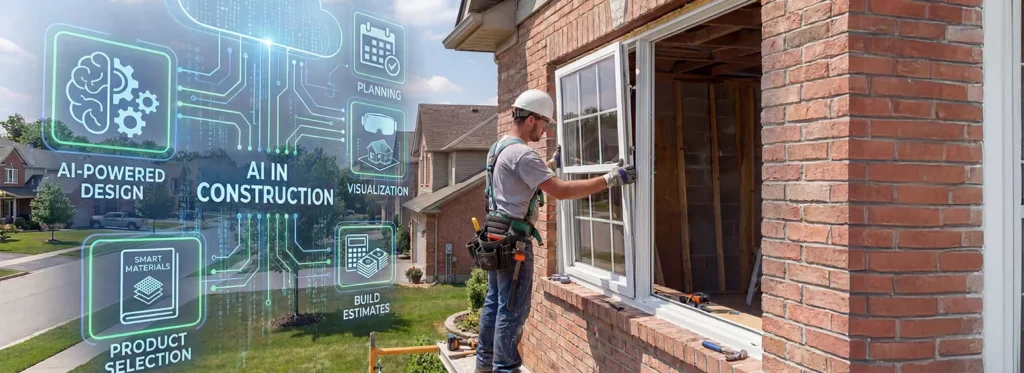
Artificial intelligence is starting to reshape construction at every level, from large commercial projects to everyday home improvement work. What used to sound experimental now shows up in practical places: smarter design tools, faster estimating, better scheduling, and more useful project data. The market is moving quickly, too. Mordor Intelligence data projects1 that the AI construction market will grow from about $3.99 billion in 2024 to $11.85 billion by 2029.
For home improvement professionals, the takeaway is simple: AI is becoming part of the toolset. AI-powered programs help contractors plan better, move faster, and communicate more clearly with homeowners. It is not replacing experience in the field, but it is helping teams by complimenting that experience with more speed and precision.
Can I Use AI in Construction? And Why Does It Matter for Home Improvement?
The short answer: Yes. In plain terms, AI helps contractor software by recognizing patterns, making predictions, and automating repetitive decisions using data. Machine learning is one part of that. It improves performance over time by learning from past jobs, pricing inputs, schedules, and outcomes. In construction and home improvement, that can mean anything from smarter cost forecasting, to utilizing tools that help visualize a remodel before work begins.
Why does that matter for home improvement? Because trends that begin at the enterprise level usually move downstream. Large construction firms often adopt new digital tools first, and the same capabilities eventually show up in contractor-facing platforms for estimating, scheduling, design, and customer communication. That is already happening with AI. As the broader construction market invests more money in intelligent tools, home improvement businesses begin to gain access to more practical, affordable versions of the same capabilities.
How Contractors and Homeowners Are Already Using AI
Most AI use in home improvement is far from seeing robots walking a jobsite. Contractors are using AI-powered design and planning tools to visualize project options, support product selections, and build estimates more quickly. Homeowners are seeing the results through clearer presentations, faster quoting, and better project planning.
Adoption is accelerating because these tools are easier to access and easier to understand than they were even a few years ago. Contractors do not need a full innovation lab to benefit from AI. In many cases, they only need software that helps them make decisions faster and communicate those decisions more clearly.

Why the Industry Has Been Slow to Adopt AI in Construction
Construction has never been an easy environment for technology adoption. Projects are complex, stakeholders are spread across teams, and workflows vary by trade, market, and project type. Even when the value is there, rolling out new systems takes time.
There are also real barriers around cost, training, and internal confidence. Many businesses have been cautious about investing in tools that are perceived to be difficult to implement or hard for teams to use. As AI features become embedded in everyday platforms, the concept becomes more adoptable at every level.
How AI is Changing the Way Home Improvement Projects Are Planned
The planning phase is one of the most apparent levels where AI is creating value. AI-powered design tools can generate layouts, support 3D visualization, and speed up cost estimation. Scheduling tools can use project data to build more realistic timelines while flagging issues that could cause delays, helping teams avoid downtime.
For contractors, this matters because faster planning creates a better buyer experience. Homeowners want clarity at every step of the process. They want to understand the scope, the options, the price range, and the likely timeline. Digital solutions that support estimating, configuration, and quote delivery help contractors meet that expectation with less manual work. This is a natural fit for platforms like Paradigm Vendo and Paradigm Omni to support the process. Both are built to help teams sell, estimate, and quote with more consistency across channels.
Smarter Budgeting and Cost Control with AI
AI can also improve budgeting by identifying patterns from previous projects. This helps teams forecast costs more accurately. By utilizing data, AI can assess material usage, make labor assumptions, and cross-reference variables that often cause overruns when they are missed.
Better budgeting is not only about internal planning, but also about presenting more reliable pricing to customers. When estimating and quoting tools connect product rules, pricing logic, and project details in one workflow, teams can protect margin while giving customers a clearer path to a decision. That is where connected platforms like Paradigm Omni and Paradigm Nexus become especially relevant for businesses managing configurable products and digital sales workflows.
AI on the Jobsite: Safety, Quality, and Productivity
AI on the jobsite is becoming more practical, especially around safety and quality assurance. By identifying unsafe conditions, AI-supported inspections can surface issues faster than manual review alone.
For home improvement contractors, the use of AI means that gathering jobsite intelligence is getting easier. Tools that support inspection, documentation, quality checks, and field communication are becoming more useful and more accessible, even for businesses that are not operating at enterprise scale.
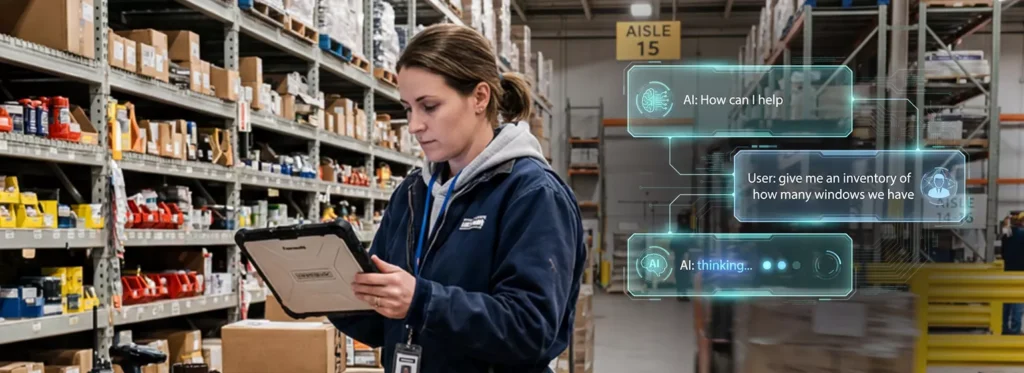
Predictive Maintenance and Equipment Health
Predictive maintenance is another practical use case. AI-supported sensors and monitoring tools installed on equipment can flag issues before they become bigger problems. This helps reduce downtime and avoid preventable project delays.
For contractors managing tools, vehicles, and large equipment across multiple jobs, early warning matters. Fewer breakdowns means fewer disruptions to schedules, crews, and customer expectations.
AI for Energy Efficiency and Sustainable Home Improvement
AI also plays a growing role in energy efficiency. Tools that support smarter construction planning, automate energy audits, and scale system optimization can help contractors and homeowners make better long-term decisions about performance products and operating cost.
Energy efficiency matters in a larger sustainability context. According to the UN Environment Program’s latest global status report2, building and construction accounts for 34% of global CO2 emission.

For home improvement companies, AI-supported decision-making can help zero-in on options faster. These platforms can also showcase material choices clearly resulting in projects that are both cost-conscious and energy conscious.
The Future of AI in Construction and Home Improvement
The next phase of AI in construction will be less about novelty and more about integration. More AI capability will be built directly into the software that contractors already use, aiding in design, estimating, quoting, scheduling, and communication. Building Information Modeling (BIM), intelligent scheduling, field documentation, and predictive insights will continue to intersect and improve the overall contracting experience.
AI is not replacing contractors. It is expanding the user capabilities and making their expertise easier to apply, scale, and present to customers. The contractors who use AI to strengthen their decision-making will benefit most.
Work Smarter, Not Harder: Choose the Right AI Tools For Your Team

AI has the power to influence how home improvement projects are designed, estimated, scheduled, sold, and completed. For contractors and homeowners alike, that means faster planning, better visibility, and more informed decisions. But it is not a one-size-fits-all scenario. For companies in the building industry, the opportunity is not to chase every new AI headline. It is to adopt the right tools that make every day work more efficient and more consistent.
Paradigm’s digital solutions help contractors and building product teams do exactly that by improving how they configure, estimate, quote, and sell. If you want to see how smarter digital workflows can support your next stage of growth, explore Paradigm’s solutions or request a demo today.
Frequently Asked Questions
AI is used to support design visualization, estimating, scheduling, energy planning, and jobsite documentation. In most cases, it shows up inside the software contractors already use rather than as a stand-alone tool.
No. AI is a tool that supports contractors in the decision-making process rather than replacing skilled field expertise, customer communication, and jobsite judgment. The strongest use case is reinforcement, not replacement.
AI helps teams forecast costs more accurately, spot budget risks earlier, and reduce waste caused by poor planning or manual errors. That can improve both pricing confidence and project control.
Common examples include AI-supported design tools, estimating and quoting platforms, scheduling tools, safety monitoring systems, and energy optimization software. The most practical tools are usually the ones built into everyday contractor workflows.
Sources:
Latest Blog Posts
AI in Construction Industry: The Future of Home Improvement
Discover how AI in construction is transforming home improvement — from smarter

CPQ vs Hiring More People – Which Is More Cost-Effective for Fenestration Teams?
Weighing the cost of CPQ software against hiring more staff? Discover which
What is CPQ Software and How to Use it
Learn what CPQ software is and how manufacturing teams can use it