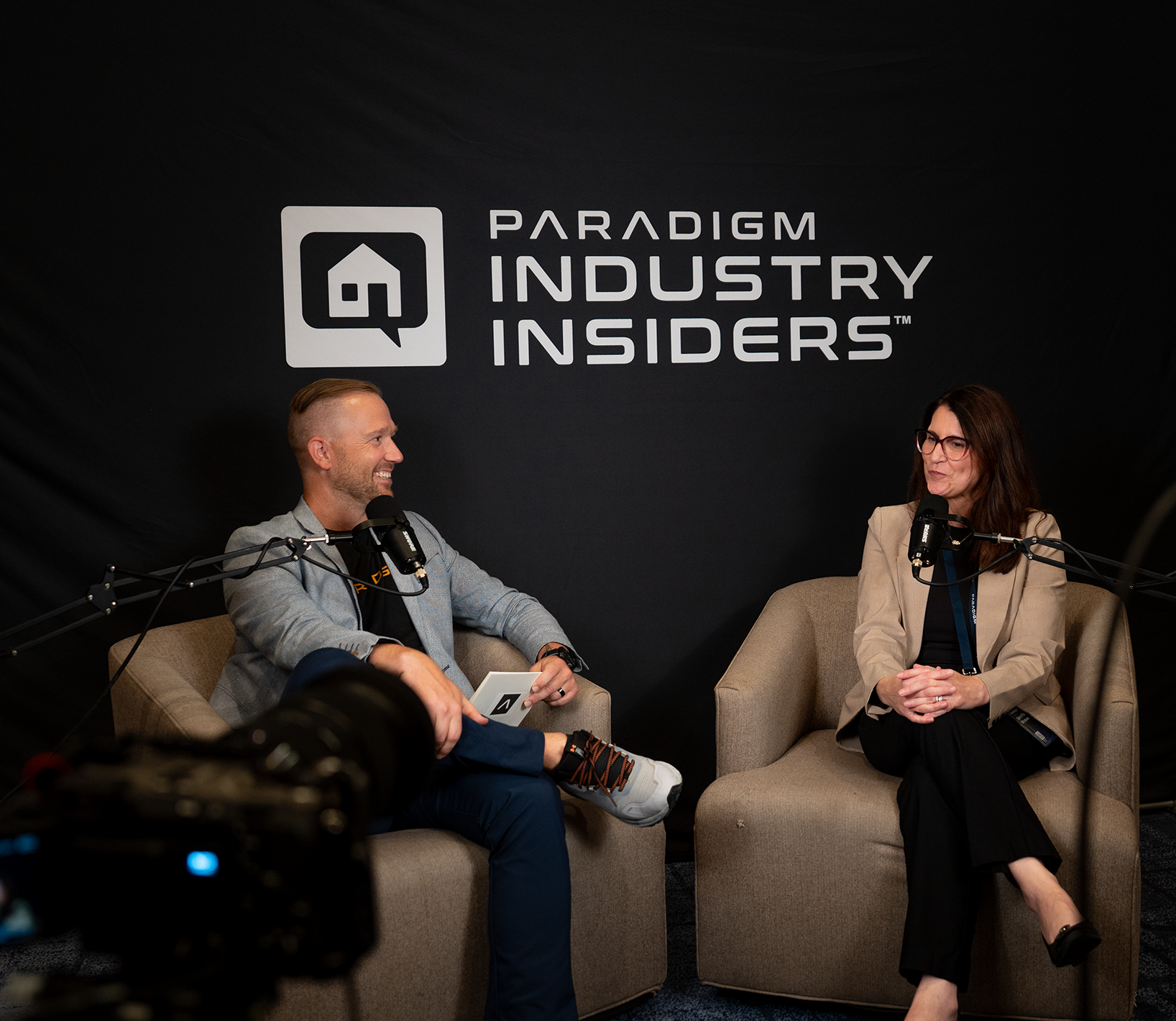
The Power of Clean Data in Smart Manufacturing | Shelly Johnson, Sierra Pacific
What if a manufacturer treated data with the same care it gives raw timber? We sit down with Shelly Johnson, Window Technology Manager at Sierra Pacific, to unpack how a seed-to-window business turns sawmill precision and cogen efficiency into a blueprint for data, cloud, and AI. Shelly shares why step one is always capture, because without clean, historical data, you’re just guessing, and how that discipline scales decisions across quoting, pricing, and production in the window and door world.
Topics covered:
• Treating data capture as step one for decisions
• Seed to window integration and waste reduction
• Sawmill optimization and cogeneration energy reuse
• Paradigm’s journey from spreadsheets to the cloud
• Serving dealers, retail, and direct channels
• Hiring for data science and AI readiness
• Building pipelines, governance, and common fields
• Coaching teams with a growth mindset
• Moving fast to stay ahead of competitors
• Parallels between music, flow, and team delivery
If you enjoyed today's conversation, be sure to subscribe on your favorite podcast platforms and follow Paradigm on LinkedIn and YouTube to catch more stories, insights, and ideas from your peers across our industry
🎥 Watch More Industry Insiders Episodes
Subscribe here: https://www.youtube.com/@myparadigmtechnology
🚀 About Paradigm
Software for the Building Industry | Paradigm’s software solutions help organizations throughout the supply chain to boost sales, reduce costs, and become more competitive. We exclusively serve the building industry, and we’ve developed our solutions with your unique challenges in mind.
🔗 Learn more: MyParadigm.com/
Facebook: https://www.facebook.com/myParadigmTechnology/
LinkedIn: https://www.linkedin.com/company/myParadigmTechnology/
Shelly Johnson:
You're always kind of chasing what data needs to get in front of the individuals that need to make decisions and trying to anticipate what information they actually need before maybe they even know to know it for themselves.
John Wheeler:
You identify the challenge. We need data maybe is the challenge. Then you have to refine your data and what you're doing. It's like step one is capturing it.
Shelly Johnson:
Step one, know how to collect the data, know how to have that information because you need the historical data in order to be able to analyze it. You know, there comes time when you're managing individuals when you know what they're capable of before they even know what they're capable of. They can't yet, or they they haven't yet figured out how to do it. So perhaps sometimes getting there, once you're there, you're you you see the A to the B, but you have to have that growth mindset.
John Wheeler:
Welcome to the Paradigm Industry Insiders Podcast, where real people share real stories about what's happening with doors, windows, millwork, and life. I'm John Wheeler, and along with my co-hosts, we sit down with your peers who are moving our industry forward. These are honest conversations packed with practical insights and lessons you can take and bring value to your team. Here's today's conversation. Welcome to the Paradigm Industry Insiders Podcast, where we tell the stories of the people, the technology, and the products of the door and window industry. My name is John Wheeler. I'm joined today by Shelly Johnson from Sierra Pacific. Shelly, you want to introduce yourself?
Shelly Johnson:
I am Shelly Johnson. I am the window technology manager at Sierra Pacific Industries.
John Wheeler:
Starting off with a little bit of a little bit of history of Sierra Pacific, I think you've been around there for a while. I think you know the the history, but for anybody that doesn't know um that you're not just a door, it's not just doors and windows, right? There's forestry and there's all sorts of things. Talk about uh talk about talk about the history of Sierra Pacific.
Shelly Johnson:
It's such a large history. It's hard to just know where to start with talking about the company. I'm very proud to be employed by Sierra Pacific, fourth generation, family-owned business. They truly are a vertically integrated company, seed to window and just absolutely everything in between. Just uh stewards of our land and just planting trees for future generations. It's just an amazing company.
John Wheeler:
And they reuse because you know, you're cutting wood and you're milling down the the things and you reuse. Talk about some of the stuff that they like reuse the sawdust for. Oh my goodness.
Shelly Johnson:
So I was about two years into being an employee, and I got to take one of these wonderful sawmill uh tours by the IT manager at the time. And he manager did this. Yes, and he was an amazing tour guide. And you know, kudos to him. It really locked me in. Um, it really did. We um got to see just a cogen plant. And wow, if you ever wanted to know anything about fibers and it just be beyond what you actually want to know about wood. I mean, there's just pride in in every one of those employees. Um just from the um seeing these big cranes that are just taking these huge loads of logs and uh dropping them down and then taking that log and how they use, you know, they maximize, they scan the log, they are looking at how to cut that log in the most efficient fashion, you know, and then just to think about, you know, just that one little piece of the the puzzle there in my little tour, tour to sawmill. They take that and just everything down to the sawdust and reuse that for energy and you know, actually create more energy than they use and then can produce that back. And it's just the consciousness of every business decision and how to utilize everything is just so impressive to me.
John Wheeler:
Interesting, because the there's two locations. One of them is in the middle of nowhere in Wisconsin, and the other one's in the middle of nowhere.
Shelly Johnson:
In the middle of nowhere in Wisconsin.
John Wheeler:
Just kissing, northern Wisconsin and then way northern California.
Shelly Johnson:
Yes.
John Wheeler:
Uh, because I'm in Sacramento and you're still like three hours north of where I'm at.
Shelly Johnson:
Correct.
John Wheeler:
Out there. And I feel like you know, part of that probably comes from that's the way that they've always done it. You know, when you're that far from anything, you have to reuse everything. And then the respect for the planet and and things like that. That's probably where a lot of that comes from. There are, you know, Sierra Pacific's been a customer of ours for a long time. You told me an interesting story a while ago about the beginnings of of paradigm. And I try to tell the the stories and you know, with Lynn Hardle and and all of that, but your perspective was way cooler than mine. Tell me about that.
Shelly Johnson:
Oh my goodness. Yeah, I it actually was my first job out of school.
John Wheeler:
Really?
Shelly Johnson:
Yes. Um, so first job out of school. Um, you know, you always think you know everything when you know, like, oh yeah, I know everything about software, I know everything about PC technician, and yeah. Um, and we were looking for a new configurator, and here was this engineer that was going to come in and show us a product, and um, this was gonna be in this new um window configuration um configurator. And you know, he he was a person from the industry, just saw the need. And so here we're sitting down after this huge um sales training meeting, and we're looking at this this demo, and it's literally Excel spreadsheet.
John Wheeler:
You know, it really is, it was the start of anything good.
Shelly Johnson:
Yeah, well, kind of, I mean, like anybody that likes data likes Excel spreadsheets and the spreadsheeting. I'm I'm jived by all my family members about no, Shelley probably has a spreadsheet on that. Um but um yeah, um we we literally saw the concept of paradigm on these spreadsheets. And you know, just the concept of you know, choosing options and and everything. And you know, I'm really kind of new to just all the window jargon just to think of that now, flash forward how many years and being here at the paradigm conference and you can do this math.
John Wheeler:
More than 20. How about that?
Shelly Johnson:
Yeah, it's more than 20. It's more than 20. Um, but it yeah, it it's just it's almost whenever every year I've come in the at least in the last four years, it's so nostalgic to come and be part of this and see how it's grown from that to what it is now, and to be still in a a part of the evolution of it, right? And just to see it keep growing and it's it's just as exciting as it was back then because you know, back then kind of was Y2K time, right? So we're all like flying all over doing what accounting patches, anybody that was in the IT world back then. Um and now we're looking at AI and the explosion of that next technology and the exciting things, and yeah, it's it's exciting.
John Wheeler:
And I know you know, I was talking with Dana just a little bit ago, your Dana.
Shelly Johnson:
Yeah.
John Wheeler:
And uh I know you just hired a guy to do data stuff.
Shelly Johnson:
Yes.
John Wheeler:
Um talk about like the you know, when you realize that this AI thing or data science or whatever that is, like what I'm assuming that falls under your role. Like how did you know that that's the path you need to do?
Shelly Johnson:
Well, some of it falls in your lap a little bit, right? The economy changing, um, the need for different types of data. And you're always kind of chasing what what data needs to get in front of the individuals that need to make decisions and trying to anticipate what information they actually need before maybe they even know to know it for themselves. Because sometimes it's a two-way street, right? It's a color way to think about it. Yeah, it is a two-way street because you have you have either I I know they could probably use this, or I need to unlock this because this is going to help them figure out how to analyze this cost better, but you have to have the data. So you have to figure out how to collect the data. Step one. Step one, know how to collect the data, know how to, you know, have that information because you need the historical data in order to be able to analyze it. Yep. It's just, you know, trying to be ahead of that game and finding, you know, individuals that can um provide that need. I it's a I think some of the AI is kind of fallen in our lap, right? And um we're we're trying to figure out how to utilize it, how to maximize it. Um, I think we're very smart as a company to try to get somebody who's a little bit more in touch with how to start collecting that data. We have somebody in place to help us start seeing that picture on the back end side of things to be able to say, how do I need to start capturing this data? Here's what you need to do as programmers to start getting it at that, getting it to us that way. And then you can start start the work of what do you do then with with what you were capturing.
John Wheeler:
Now you can start start to now you can start to solve challenges and things because that's yes. So you identify the challenge and it's like we need data, maybe is the challenge. But then you you have to refine your data and what you're doing. And if you're it's like step one is capturing it, because if you're not absolutely capturing it, or you're gonna find gaps and things like okay, now we gotta add, you know, this button to for people to click, or or whatever it is. Thinking about it, like putting myself in your shoes and knowing the expanse of Sierra Pacific, like it makes my head spin. That just all the data points. Because you got the the customers and you have all of the the sales and quoting and all of that stuff, but then you have like the forests that I ride my dirt bikes through, and you have the the lumbers, and then you have the doors, you have the windows, and there's glass, and there's grids, and there's all this, all this stuff. How do you manage like keep all of that? Like, how do you keep I would imagine leadership has a focus on something, but you need to solve all these challenges and provide the data, but you can't just try to solve 4,000 things at the same time. Like, how did how do you pick where to start?
Shelly Johnson:
Well, I am very fortunate that I am just Windows division.
John Wheeler:
Oh, perfect. Yes.
Shelly Johnson:
So that's that makes me feel filter that down on just a tad. Um, yeah, and there and we have an immense uh uh IT staff that it has you know area specific specialties. So that is very helpful. Yeah, that it is not in everything. I don't, yeah, it's just too wide of a footprint to be able to do that. Um, so we do have um this gentleman that is on the AI side that is going to be helping us format over industry, and then eventually we'll have another individual that'll be over Windows Division. Sierra Pacific prides themselves in being very homegrown. We are, you know, they they love to do things from the ground up. They do not shy away from a challenge and they will, you know, do it themselves, even if it's a little bit of a harder path. But for the pride of it and and to just know that it's done right. We could have gone down a different path. But I think the realization that the partnership we already had with with paradigm was it it was really something to grow, you know, and so I think that the decision to use um and continue to grow with paradigm and become cloud-based became kind of a no-brainer when they took into uh you know, into consideration that kind of concept. You know, the best business practice. We want to be the easiest to do business with. And we knew that that was the path to go cloud-based and continue to grow to make a a product that was going to be easier for us to grow our sales and be easier to do business with.
John Wheeler:
Yeah. And then because you don't just do it's not just like dealer direct, you have retail locations and you have places like that. So you have all these different customer, customer avenues, and it's cool that you're taking, you know, how do we be the easiest for each one of these business segments, you know, for the each one of the customers in there to do do business with. So I think, you know, one of the things I wanted to talk about as the you're the leader of the team, right? How do you if when you see the potential in somebody or know that they could be doing more, um, you know, helping them kind of get out of their own way. You told me once, you know, it's replacing I can't with I can't yet. You want to add in the yet at the end. Tell me a little bit about that.
Shelly Johnson:
You know, there comes time when you're you you're managing individuals when you you know they can. You know they have it in them. You know what they're capable of before they even know what they're capable of. And I'm I feel very fortunate that uh Sierra Pacific has, you know, given me this team that of individuals. I have I have an amazing group of developers. Sometimes I I feel like you know, a person doesn't realize they need to get past themselves. It kind of goes back to that conversation we were talking a little bit about musicians and getting out of your head. You know, they need to get out of their head and be like, okay, I they just need to see that they they can't yet, or they they haven't yet figured out how to do it. And but it's still there. And one of the things that I know I when I'm chatting with um my group, it's I know that it's Jeremy Baremy. You know, sometimes I know that the the the path, sometimes getting there, once you're there, you're you you see the A to the B, but um it's just giving a little grace to know that yeah, you have the threshold to get there, but you have to say to yourself, I you have to have that growth mindset that you're just not there, you just don't know how to do it yet, but you're gonna figure it out. And you have to tell yourself you're gonna figure it out instead of letting yourself get just stuck. Just I can't, or I well, I'm just waiting for you. No, you don't just wait. You you you fig you why don't what don't you know? Who do you need to ask to get there? And you know, just unlock your own path, right? A little bit.
John Wheeler:
And it's a lot of trust, especially as the the leader. You you trust in them, you have full faith, but they also have to trust themselves and you that if they make a mistake, it's totally fine. That's they have to be kind of comfortable learning on fire. I think it feels like it's the only way to get it.
Shelly Johnson:
Yeah, and in the way that you know, tech and just the industry is going so fast and you're trying to keep up with everything, you have to you have to allow yourself that. Yeah.
John Wheeler:
One of the things, you know, we've we've talked a few times, and one of the things um that that you told me, one of the phrases was, you know, everything's changing. You you talked about that before, but if you're running from a bear and you stop, you die, talk about that as it relates to business. Because if you slow down, there's other people that make windows just like you do. Talk about that philosophy.
Shelly Johnson:
So yeah, yeah, that was a that was a good one. I I'm good for one-liners, and then yeah, let's go back and analyze that, right? We're we're in IT, we're in the window and door manufacturing business. You know, it's it's ever evolving. And if you don't keep going and keep trying and doing better and providing different tools, then you know, you're you're you're gonna be eaten by the bear.
John Wheeler:
Yeah, 100%.
Shelly Johnson:
So sometimes it's just in the I mean, like the in that trial and just the sheer just kind of keep moving that you you get projects done that you're you're leading through example and that you learn just keep learn things the hard way.
John Wheeler:
It's the only way to learn anything. Absolutely. That's my at least my personal choice for learning things is just the absolute hardest way possible. Uh I think we'll end with you know, you you've you've been doing music for a long time, and I think it was you know, later in life you're you're doing the band thing, and it wasn't until later in life that you started doing doing that. So talk a little bit about how does that bleed into your professional life at Sierra Pacific, you know, just kind of doing the darn thing.
Shelly Johnson:
Yeah, I I I've got to a point in my life where I just, you know, I stopped thinking about trying to be confident, trying to not be nervous. Um, you know, I I kind of use the phrase, I got in my head. You know, you get in your head about something where you're you're just you're thinking so much about it that you're not enjoying it or you're not you're not really living it and making it happen. And I think that that's one thing at this point in my career, and and especially in music, is that I I just feel like I'm enjoying it. I I've always wanted to do it to bring people joy. You're not always ever going to be everyone's cup of tea. But that's not what you're trying to do either. You're just you're trying to share something that somehow is really naturally in you.
John Wheeler:
Sierra Pacific has uh a really long, complex history. And you know, you've been there for a really long time. It seems like you know, you're really bought into the whole process from you know the early days until now, and it's really exciting. Tell me about uh what your favorite part or your favorite parts are from working there.
Shelly Johnson:
Well, I think that it's the components of, you know, just there's technical aspects of music that fill this little part of your brain that's just very satisfying. And that's with people that are like geeking out on data or you know, looking at metrics on something and they're just, you know, it satisfies that. But there's the part of this free, like unexplained artistic part of performing that I feel connects with the feeling that you have when you connect with your team. You know, there's just a there's a satisfaction with feeling like I delivered this, and there's a satisfaction with that with your team when as a group, it's just like in a in a in a band, I mean like as a group, you've collectively delivered something that's been received, and it's something that you know each one of you have this special part in it. And I just feel like that that I think that if you really starting to think about it, you can see the connections there with with them both.
John Wheeler:
You're the singer in the band. Uh what uh instrument do you play at Sierra Pacific?
Shelly Johnson:
Oh, that is a great question. If okay, I would say that if I was an instrument, if if I was if this was like a high school band, I'd be the cheerleader. You know, like I would be I'd be the baton person in the front, just wanting that group to just keep rocking, you know. But I still know you know, I'm not just the the the person on the outside. I still know how to do all the things, but I mean the way but I want to lead the way and be part of it.
John Wheeler:
And keep it all in time too, on the own rhythm. I didn't know that's what that person's doing.
Shelly Johnson:
Yes, they're keeping uh there's a lot more to that position than you.
John Wheeler:
I had no idea until just recently that that was what they were doing. Yeah. I thought they were just out there just speed walking or something. I don't know what it was. This was a lot of fun. I feel like we we had a good time and uh I appreciate you being on.
Shelly Johnson:
Thank you for having me.
John Wheeler:
Thanks for joining us on the Paradigm Industry Insiders podcast. If you enjoyed today's conversation, be sure to subscribe on your favorite podcast platforms and follow Paradigm on LinkedIn and YouTube to catch more stories, insights, and ideas from your peers across our industry. See y'all.
Paradigm Industry Insiders

John Wheeler
Sales Technician, Paradigm
John is a distinguished Sales Leader at Paradigm, renowned for his deep passion for the Millwork industry and his innovative contributions to the field. With decades of expertise in distribution and sales, John's strategic insights and forward-thinking approaches have propelled significant advancements and growth within the sector.

Guest
Shelly Johnson, Sierra Pacific Industries
Shelly Johnson is a technology leader who combines artistry and analytics in the window and door industry. As Window Technology Manager at Sierra Pacific Industries, she helps transform a legacy from seed to window into a data-driven future, leading teams that turn manufacturing precision into digital intelligence. Known for her growth-minded leadership and love of clean data, Shelly combines structure and creativity to help one of America's most vertically integrated manufacturers stay ahead of the industry.
Read More
This episode highlights how Sierra Pacific Industries blends deep-rooted tradition with forward-thinking data strategy to stay competitive in modern manufacturing.
Shelly Johnson explains why clean, consistent, and complete data is essential before AI or analytics can deliver real value, emphasizing that capturing information is always step one. She shares how Sierra Pacific’s vertically integrated ecosystem—from forest to finished window—creates a unique platform for optimization, sustainability, and innovation.
By moving operations to the cloud and strengthening its partnership with Paradigm, the company is streamlining processes and becoming easier to do business with across every customer segment.
Shelly also offers insight into leadership, describing how a growth mindset, anticipation of future data needs, and confidence-building coaching help teams thrive. Ultimately, the conversation shows how discipline, curiosity, and continual forward motion drive the future of smart manufacturing.